
Lymphedema Exercises to Avoid: A Safety Guide for Patients
Not sure which exercises are safe with lymphedema?
Learn about activity modification, warning signs and
the importance of personalized physiotherapy guidance.
Knowing which lymphedema exercises to avoid can help
you make informed decisions about physical activity. Lymphedema may
cause swelling, heaviness or tightness in an arm or leg, sometimes
following breast cancer surgery, lymph node removal or radiation therapy.
Exercise is not automatically harmful for people with lymphedema.
In fact, appropriately selected and gradually progressed activity
can be part of rehabilitation. The important point is to choose
activities according to your symptoms, treatment history and
healthcare professional’s advice.
medical assessment. Redness, warmth, fever or significant pain may
indicate infection or another condition requiring prompt care.
Chest pain or sudden breathlessness requires emergency medical attention.
Why Does Exercise Need to Be Individualized?
Lymphedema affects people differently. Some people have mild swelling
and good mobility, while others experience discomfort, restricted
movement or additional complications.
Your exercise choices may also depend on recent surgery, wound healing,
radiation-related changes, other medical conditions and whether you
have been prescribed compression.
5 Exercise Situations That May Need Modification
1. Sudden Heavy Lifting
Avoid sudden increases in load beyond your current capacity.
Build resistance gradually, especially after surgery or a period
of reduced activity.
2. High-Intensity Exercise Too Quickly
Suddenly increasing workout duration or intensity may aggravate
symptoms. Progress according to your tolerance and professional advice.
3. Painful Shoulder Movements
Do not force overhead movements or stretches that cause significant
pain. Postoperative restrictions should always be respected.
4. Continuing Despite Worsening Swelling
If swelling or heaviness increases noticeably during or after
activity, pause and seek advice about modifying your programme.
5. Exercises Against Medical Restrictions
Some movements may be temporarily unsuitable after surgery,
reconstruction or another medical procedure. Follow your treating
team’s specific instructions.
6. Unsupervised Treatment Techniques
Do not substitute forceful massage, improvised compression or
unverified techniques for professional lymphedema management.
Should You Avoid Weight Training With Lymphedema?
Not necessarily. Many people with lymphedema can participate in
appropriately progressed resistance exercise. The starting load,
exercise selection and progression should match the individual’s
condition and recovery stage.
If you have recently had breast cancer surgery, ask your surgeon
or physiotherapist when resistance exercise can begin. Stop and
seek guidance if an activity causes unusual pain or worsening symptoms.
What Exercises May Be Suitable Instead?
Depending on your assessment, a physiotherapist may recommend
comfortable, controlled activities such as:
- Gentle hand, wrist and elbow movements.
- Suitable shoulder mobility exercises.
- Walking or other appropriate general physical activity.
- Gradual strengthening exercises.
- Relaxed breathing as part of an individualized programme.
These examples are not suitable for every situation. Your clinician
can adjust the activities to your symptoms, surgical restrictions
and functional goals.
What About Compression During Exercise?
Some people are advised to wear a prescribed compression garment
during exercise, while others may receive different instructions.
Recommendations depend on the individual’s assessment and treatment plan.
Ensure that any garment is appropriately fitted. Do not start
compression or change the pressure level without professional guidance.
When Should You Stop Exercising?
Pause your activity and seek medical advice if you notice new or
worsening swelling, unusual pain, skin changes or symptoms that
do not settle.
Sudden swelling, redness, warmth, fever or significant pain requires
prompt medical assessment. These symptoms should not simply be
attributed to lymphedema or exercise.
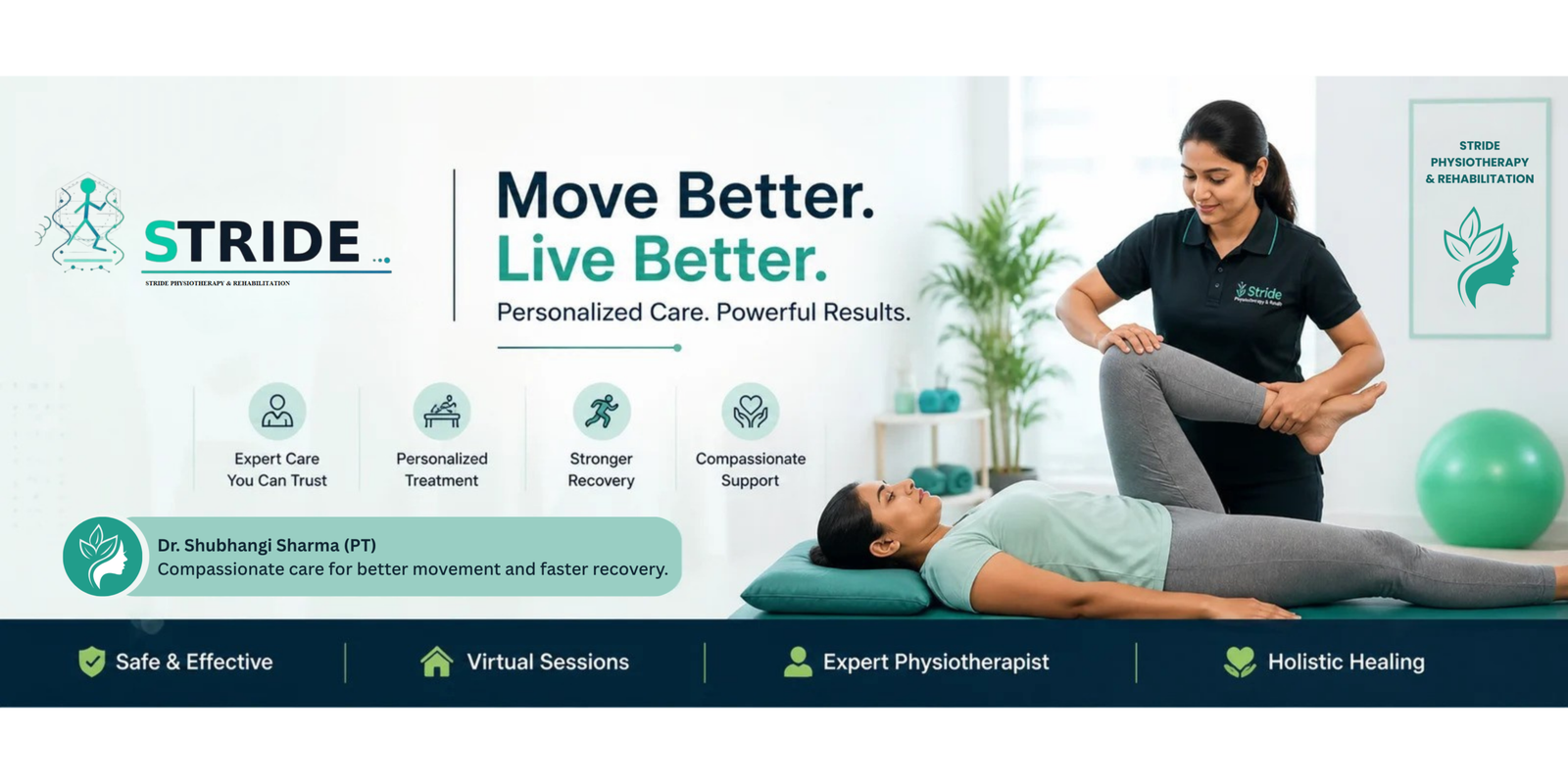
Personalized Lymphedema Guidance With Dr. Shubhangi Sharma (PT)
At Stride Physiotherapy & Rehab, Dr. Shubhangi Sharma (PT) brings
her physiotherapy education and clinical experience to rehabilitation
and patient guidance. Her background includes work across rehabilitation
needs, including oncology-related care and lymphedema management.
Her patient-focused approach emphasizes understanding individual
concerns, considering recovery needs and discussing appropriate
rehabilitation options. Rather than following the same exercise
routine as everyone else, patients should receive guidance suited
to their symptoms, medical history and functional abilities.
For patients who cannot easily attend in person, an online consultation
may help review symptoms and discuss suitable next steps. However,
some conditions require an in-person medical examination or further
investigations.
Online Lymphedema Assessment
If you experience arm swelling, heaviness or tightness, consider an
online lymphedema assessment
to discuss your symptoms, treatment history and possible rehabilitation
options.
Frequently Asked Questions
Which exercises should people with lymphedema avoid?
There is no universal list of exercises everyone must avoid.
Activities may need modification if they cause pain, worsen
symptoms or conflict with medical restrictions.
Can I go to the gym if I have lymphedema?
Many people can exercise at a gym with an appropriate programme.
Start at a suitable level, progress gradually and seek guidance
about resistance training and compression when needed.
Should I stop all exercise if my arm is swollen?
Not necessarily, but new or unexplained swelling should be
assessed first. A healthcare professional can advise which
activities are appropriate for your circumstances.
Can physiotherapy help me choose suitable exercises?
Yes. A physiotherapist can consider your mobility, symptoms,
recovery stage and goals when advising on a suitable programme.
Some symptoms also require medical assessment.
Can online physiotherapy help with lymphedema?
Video consultation may support education and exercise guidance
for suitable patients. It cannot replace an in-person assessment
when examination or investigations are necessary.
Book Your Online Lymphedema Assessment
Discuss your symptoms and rehabilitation needs with Stride
Physiotherapy & Rehab and explore suitable next steps
for your individual circumstances.
About Stride Physiotherapy & Rehab
Stride Physiotherapy & Rehab offers physiotherapy and rehabilitation
consultations, including online guidance for suitable patients.
The goal is to help patients understand their options and make informed
decisions about rehabilitation.
Learn more about the
Lymphedema Rehabilitation service
and available consultation options.
Medical disclaimer: This article is for educational
purposes only. It does not replace medical assessment, diagnosis
Related reading: Cancer rehab physiotherapy during and after treatment | Early signs of lymphedema