Cancer Rehabilitation: Supporting Recovery, Strength and Quality of Life
Cancer treatment can affect more than just physical health. Many individuals experience fatigue, muscle weakness, reduced mobility, pain, balance difficulties and challenges performing everyday activities during or after treatment.
Cancer Rehabilitation plays an important role in helping individuals address these physical challenges through structured, individualized rehabilitation and professional physiotherapy guidance.
At Stride Physiotherapy & Rehab, our journey began with a simple yet deeply meaningful realization—that access to quality rehabilitation should never depend on geography, distance, or circumstance.
The idea for Stride was born in the serene mountains, from the home clinic of Dr. Shubhangi Sharma (PT), where she closely witnessed the importance of accessible, compassionate rehabilitation.
What Is Cancer Rehabilitation?
Cancer rehabilitation is a specialized area of rehabilitation that focuses on helping people manage physical difficulties associated with cancer and its treatment.
It aims to support functional independence, improve movement, maintain physical strength and enhance overall quality of life.
Rehabilitation may be considered before, during or after cancer treatment, depending on the individual’s medical condition, treatment stage and rehabilitation needs.
Common Physical Challenges During and After Cancer Treatment
Cancer and its treatments can affect individuals differently. Some commonly experienced challenges include:
- Cancer-related fatigue: Persistent tiredness that can affect daily activities.
- Muscle weakness: Reduced strength and physical endurance.
- Reduced mobility: Difficulty walking, stretching or performing routine movements.
- Lymphedema: Swelling that may develop due to lymphatic system damage.
- Pain and stiffness: Physical discomfort that may affect movement.
- Balance difficulties: Changes in coordination and stability.
- Reduced functional independence: Difficulty performing everyday activities.
Understanding these challenges is an important first step towards developing an appropriate rehabilitation plan.
How Physiotherapy Supports Cancer Rehabilitation
Physiotherapy can help address several physical challenges associated with cancer treatment and recovery.
1. Improving Physical Strength
Individualized strengthening exercises may help address muscle weakness and support the ability to perform everyday activities.
2. Managing Cancer-Related Fatigue
Appropriately planned physical activity and energy conservation strategies may help individuals manage fatigue and gradually improve activity tolerance.
3. Improving Mobility and Flexibility
Gentle movement exercises and mobility training may help maintain joint movement and support functional activities.
4. Lymphedema Rehabilitation
Specialized lymphedema rehabilitation may include Complete Decongestive Therapy (CDT), compression guidance, skin care, exercise and other clinically appropriate interventions.
5. Supporting Functional Independence
Balance training, walking exercises and functional movement activities may help individuals work towards greater independence in daily life.
Cancer Rehabilitation for Different Types of Cancer
Rehabilitation needs vary according to cancer type, treatment and individual physical limitations.
Physiotherapy may form part of supportive rehabilitation for individuals affected by:
- Breast Cancer
- Oral Cancer
- Head and Neck Cancer
- Lung Cancer
- Colorectal Cancer
- Gynaecological Cancer
- Blood Cancers
- Other Cancer Conditions
Each rehabilitation programme should be individualized and coordinated with the treating medical team.
Why Choose Stride Physiotherapy & Rehab?
At Stride Physiotherapy & Rehab, we believe rehabilitation should focus on the individual’s needs, comfort and functional goals.
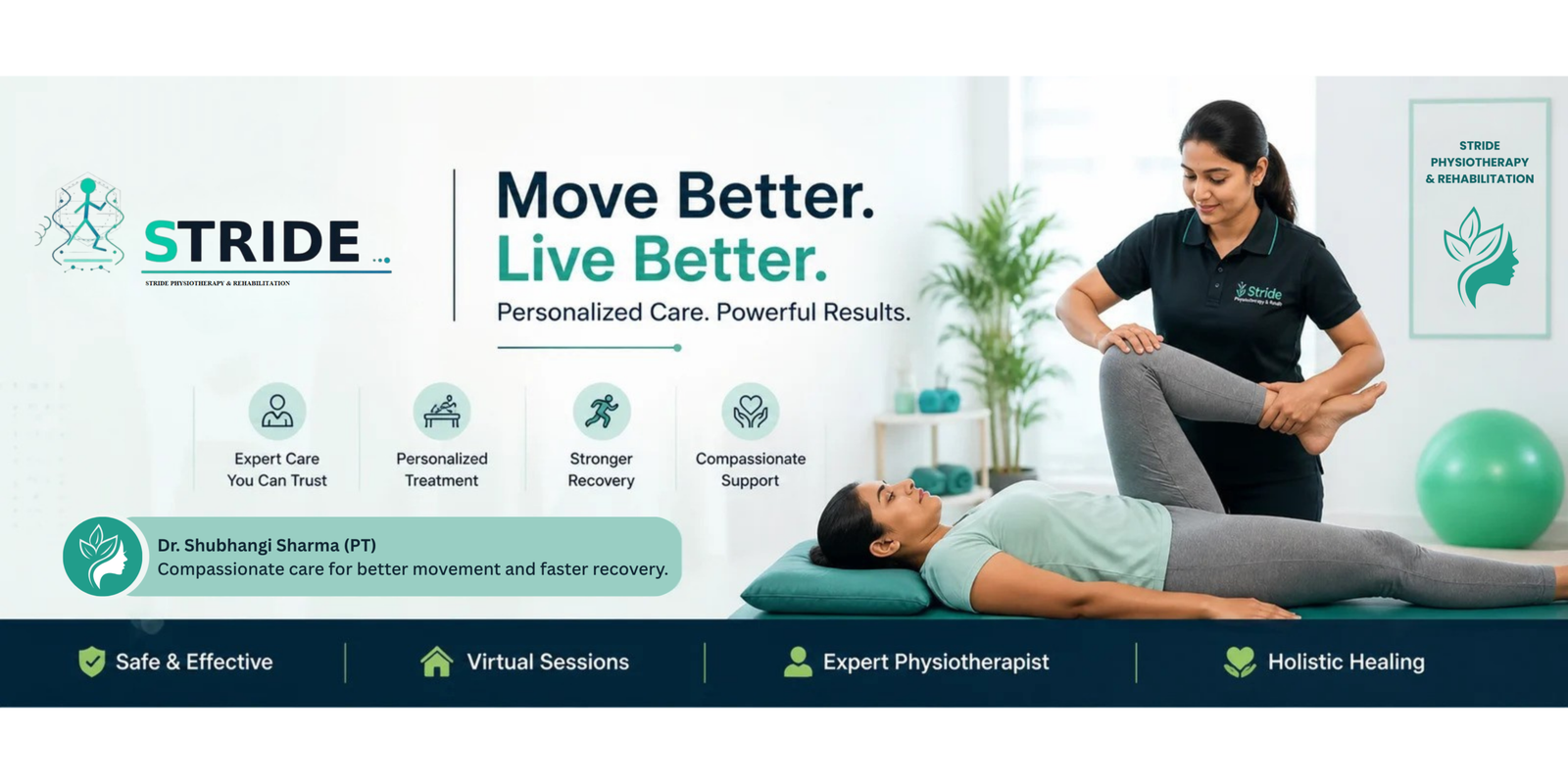
Under the guidance of Dr. Shubhangi Sharma (PT), Senior Physiotherapist with 6+ years of experience, our rehabilitation approach emphasizes:
- Individualized physiotherapy guidance.
- Oncology rehabilitation support.
- Lymphedema rehabilitation and CDT.
- Mobility and strengthening exercises.
- Functional recovery programmes.
- Online physiotherapy consultation.
- Patient education and home exercise guidance.
Our aim is to make professional rehabilitation guidance more accessible through appropriate in-person and virtual consultation options.
Can Cancer Rehabilitation Be Done Online?
Yes, selected aspects of cancer rehabilitation can be supported through online physiotherapy consultations.
Virtual sessions may include exercise demonstrations, movement guidance, posture education and follow-up discussions.
However, certain conditions require an in-person assessment or specialized clinical intervention. The suitability of online rehabilitation depends on the patient’s medical condition and safety requirements.
Frequently Asked Questions (FAQs)
1. When should cancer rehabilitation begin?
Cancer rehabilitation may begin before, during or after cancer treatment, depending on the individual’s health and medical team’s recommendations.
2. Can physiotherapy help after cancer treatment?
Yes. Physiotherapy may help address muscle weakness, mobility limitations, fatigue and functional difficulties following cancer treatment.
3. Is cancer rehabilitation suitable for all cancer patients?
Rehabilitation can benefit many individuals, but the programme must be adapted to their medical condition, treatment status and physical capabilities.
4. Does cancer rehabilitation include lymphedema treatment?
Yes. Specialized lymphedema rehabilitation can be an important component of cancer rehabilitation when clinically indicated.
5. Can I receive cancer rehabilitation guidance online?
Selected rehabilitation services can be provided through virtual consultations, depending on individual assessment and clinical suitability.
Begin Your Rehabilitation Journey with Stride
Recovery is an individual journey, and every person’s rehabilitation needs are different.
At Stride Physiotherapy & Rehab, we focus on supporting movement, functional recovery and physical well-being through personalized physiotherapy guidance.
Dr. Shubhangi Sharma (PT) and the rehabilitation approach at Stride aim to help individuals work towards better mobility, greater confidence and improved quality of life.
Website: https://stridephysio.co.in/
Consultation: Online and in-person options, subject to clinical suitability.
Move Better. Live Fully.